Vera Frank · 23 September 2026
Tracing Infrastructure Shifts and Their Quiet Effects on Search Visibility Patterns
Observers tracking digital ecosystems note that infrastructure shifts occur when organizations move hosting environments, adopt new content delivery networks, or upgrade to protocols such as HTTP/3 and these changes often register first through metrics like server response times and crawl frequency. Research from academic institutions shows that even modest alterations in DNS configurations or data center locations can alter how search engine bots prioritize pages without triggering obvious ranking alerts. Data indicates that sites undergoing cloud migrations experience temporary dips in indexation rates while bots recalibrate to new IP ranges and certificate setups.
Common Infrastructure Changes and Their Pathways
People who monitor web performance report that shifts frequently involve transitions from traditional shared hosting to distributed cloud platforms or from regional servers to global edge networks and these moves affect latency patterns that search algorithms factor into visibility scores. According to studies on network architecture, implementation of anycast routing reduces geographic latency yet requires bots to relearn optimal entry points which can delay full re-crawling cycles. Figures from industry reports reveal that organizations adopting containerized deployments sometimes introduce variable resource allocation and this variability shows up in crawl budget consumption statistics tracked by major engines.
Turns out many of these adjustments remain invisible to casual site owners until aggregated data from tools tracking backlink profiles and organic impressions begin to fluctuate and researchers have documented cases where a simple SSL certificate renewal combined with a host cutover produced sustained changes in mobile-first indexing signals. What's interesting is how security enhancements like stricter TLS versions or added firewall layers can inadvertently block certain bot user agents leading to incomplete scans that compound over weeks.
Mechanisms Behind Subtle Visibility Adjustments
Evidence suggests that search visibility patterns respond to infrastructure through indirect channels including page speed scores, crawl efficiency, and trust signals derived from certificate authority chains and these elements interact with ranking models in layered ways. A study conducted by researchers at a Canadian university demonstrated that sites shifting to European data centers saw measurable improvements in regional query performance while experiencing neutral or slightly reduced results for queries originating from other continents. Observers note that content freshness algorithms sometimes interpret slower server handshakes as reduced update activity even when actual content remains unchanged.
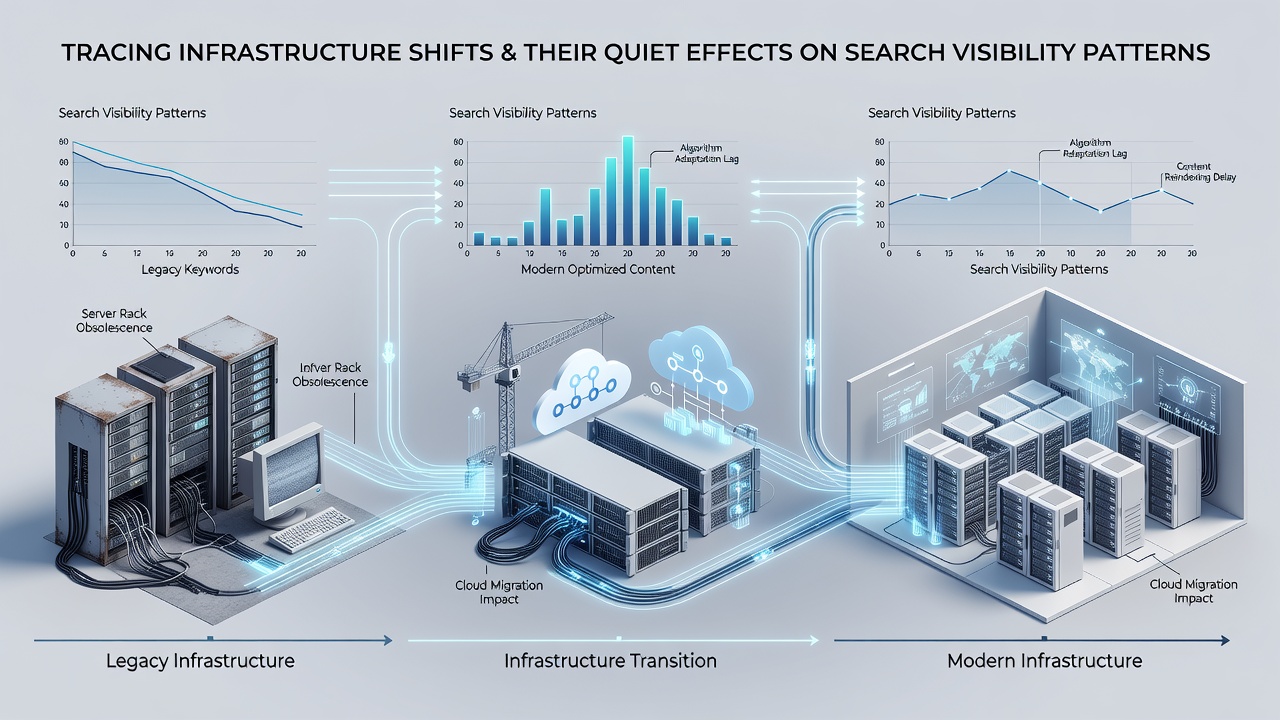
But here's the thing: protocol upgrades such as the rollout of QUIC connections alter how packets traverse networks and bots that have not fully adapted may allocate fewer resources to affected domains until compatibility stabilizes. Data from the Australian Communications and Media Authority highlights patterns where organizations completing infrastructure modernizations in 2025 recorded recovery periods spanning four to eight weeks before previous visibility levels returned across core keyword sets. Those who've examined log files find that changes in server header responses often correlate with shifts in how frequently pages receive secondary crawls that influence deeper index layers.
Documented Patterns Across Different Sectors
Experts examining multiple industries find that e-commerce platforms undergoing CDN swaps frequently observe category page visibility adjustments tied to image delivery optimizations while news outlets report steadier impacts from API endpoint migrations that affect structured data retrieval. Research indicates that educational websites moving to new hosting providers sometimes experience prolonged periods where archived content receives lower priority in long-tail searches because historical crawl paths become disrupted. Figures reveal that September 2026 marks a projected milestone for broader adoption of enhanced IPv6 routing mandates in several regions and analysts anticipate corresponding adjustments in global search distribution as a result.
One case examined by European digital infrastructure analysts showed that a regional media network completed a phased migration to edge computing resources and visibility metrics for informational queries stabilized only after bots established consistent connections through the new architecture. What's significant is the quiet accumulation of small latency reductions that eventually compound into noticeable ranking movements without any single change appearing decisive on its own.
Monitoring and Adaptation Approaches
Those tracking these effects rely on server logs combined with search console data to identify correlations between infrastructure events and visibility shifts and this approach allows teams to distinguish temporary fluctuations from longer-term pattern changes. Reports from academic sources emphasize the value of maintaining consistent IP reputation across migrations while organizations that neglect certificate transparency logs sometimes encounter extended verification delays from automated systems. People monitoring industry developments note that preparation for upcoming protocol standards expected around September 2026 involves testing crawl simulation tools against proposed network configurations well in advance.
Conclusion
Overall patterns demonstrate that infrastructure shifts exert measurable though often understated influences on search visibility through interconnected technical pathways and continued observation of these dynamics supports more precise management of digital properties. Data continues to accumulate around how specific changes interact with evolving bot behaviors and this information assists organizations in planning transitions with greater awareness of potential downstream effects.